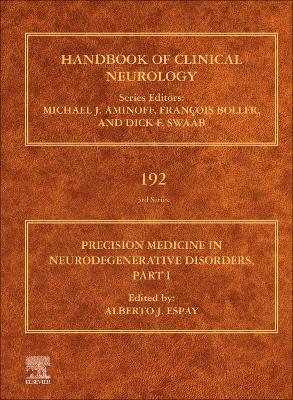
Precision Medicine in Neurodegenerative Disorders
 -10%
portes grátis
-10%
portes grátis
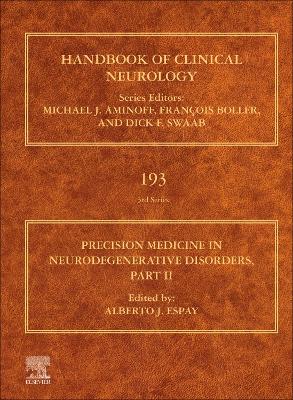
Precision Medicine in Neurodegenerative Disorders
Part II
Espay, Alberto J.
Elsevier - Health Sciences Division
07/2023
392
Dura
Inglês
9780323855556
15 a 20 dias
Descrição não disponível.
Part 3 Basic Science Development
1. Role of rodent models in advancing precision medicine for Parkinson disease
2. The allure and pitfalls of the prion-like aggregation in neurodegeneration
3. The shift to a proteinopenia paradigm in neurodegeneration
4. Disease mechanisms as subtypes: Lysosomal dysfunction in the endolysosomal Parkinson disease subtype
5. Disease mechanisms as subtypes: Mitochondrial and bioenergetic dysfunction
6. Disease mechanisms as subtypes: Immune dysfunction in Parkinson disease
7. Disease mechanisms as subtypes: Inflammation in Parkinson disease and related disorders
8. Disease mechanisms as subtypes: Microbiome
9. LRRK2: Genetic mechanisms vs genetic subtypes
10. Genetic mechanism vs genetic subtypes: The example of GBA
11. Subtyping monogenic disorders: Huntington disease
Part 4 Clinical Trials and Therapeutic Approaches
12. Disease-modifying vs symptomatic treatments: splitting over lumping
13. Restorative cell and gene therapies for Parkinson disease
14. The promise and challenges of extracellular vesicles in the diagnosis of neurodegenerative diseases
15. Therapeutic potential of extracellular vesicles in neurodegenerative disorders
16. Lessons from antiamyloid-? immunotherapies in Alzheimer disease
17. Lessons from immunotherapies in multiple sclerosis
18. Adaptive clinical trials and master protocols
19. Role of novel endpoints and evaluations of response in Parkinson Disease
20. Leveraging the regulatory framework to facilitate drug development in Parkinson disease
1. Role of rodent models in advancing precision medicine for Parkinson disease
2. The allure and pitfalls of the prion-like aggregation in neurodegeneration
3. The shift to a proteinopenia paradigm in neurodegeneration
4. Disease mechanisms as subtypes: Lysosomal dysfunction in the endolysosomal Parkinson disease subtype
5. Disease mechanisms as subtypes: Mitochondrial and bioenergetic dysfunction
6. Disease mechanisms as subtypes: Immune dysfunction in Parkinson disease
7. Disease mechanisms as subtypes: Inflammation in Parkinson disease and related disorders
8. Disease mechanisms as subtypes: Microbiome
9. LRRK2: Genetic mechanisms vs genetic subtypes
10. Genetic mechanism vs genetic subtypes: The example of GBA
11. Subtyping monogenic disorders: Huntington disease
Part 4 Clinical Trials and Therapeutic Approaches
12. Disease-modifying vs symptomatic treatments: splitting over lumping
13. Restorative cell and gene therapies for Parkinson disease
14. The promise and challenges of extracellular vesicles in the diagnosis of neurodegenerative diseases
15. Therapeutic potential of extracellular vesicles in neurodegenerative disorders
16. Lessons from antiamyloid-? immunotherapies in Alzheimer disease
17. Lessons from immunotherapies in multiple sclerosis
18. Adaptive clinical trials and master protocols
19. Role of novel endpoints and evaluations of response in Parkinson Disease
20. Leveraging the regulatory framework to facilitate drug development in Parkinson disease
Este título pertence ao(s) assunto(s) indicados(s). Para ver outros títulos clique no assunto desejado.
precision medicine; neurodegenerative disease; Movement disorders; Parkinson's
Part 3 Basic Science Development
1. Role of rodent models in advancing precision medicine for Parkinson disease
2. The allure and pitfalls of the prion-like aggregation in neurodegeneration
3. The shift to a proteinopenia paradigm in neurodegeneration
4. Disease mechanisms as subtypes: Lysosomal dysfunction in the endolysosomal Parkinson disease subtype
5. Disease mechanisms as subtypes: Mitochondrial and bioenergetic dysfunction
6. Disease mechanisms as subtypes: Immune dysfunction in Parkinson disease
7. Disease mechanisms as subtypes: Inflammation in Parkinson disease and related disorders
8. Disease mechanisms as subtypes: Microbiome
9. LRRK2: Genetic mechanisms vs genetic subtypes
10. Genetic mechanism vs genetic subtypes: The example of GBA
11. Subtyping monogenic disorders: Huntington disease
Part 4 Clinical Trials and Therapeutic Approaches
12. Disease-modifying vs symptomatic treatments: splitting over lumping
13. Restorative cell and gene therapies for Parkinson disease
14. The promise and challenges of extracellular vesicles in the diagnosis of neurodegenerative diseases
15. Therapeutic potential of extracellular vesicles in neurodegenerative disorders
16. Lessons from antiamyloid-? immunotherapies in Alzheimer disease
17. Lessons from immunotherapies in multiple sclerosis
18. Adaptive clinical trials and master protocols
19. Role of novel endpoints and evaluations of response in Parkinson Disease
20. Leveraging the regulatory framework to facilitate drug development in Parkinson disease
1. Role of rodent models in advancing precision medicine for Parkinson disease
2. The allure and pitfalls of the prion-like aggregation in neurodegeneration
3. The shift to a proteinopenia paradigm in neurodegeneration
4. Disease mechanisms as subtypes: Lysosomal dysfunction in the endolysosomal Parkinson disease subtype
5. Disease mechanisms as subtypes: Mitochondrial and bioenergetic dysfunction
6. Disease mechanisms as subtypes: Immune dysfunction in Parkinson disease
7. Disease mechanisms as subtypes: Inflammation in Parkinson disease and related disorders
8. Disease mechanisms as subtypes: Microbiome
9. LRRK2: Genetic mechanisms vs genetic subtypes
10. Genetic mechanism vs genetic subtypes: The example of GBA
11. Subtyping monogenic disorders: Huntington disease
Part 4 Clinical Trials and Therapeutic Approaches
12. Disease-modifying vs symptomatic treatments: splitting over lumping
13. Restorative cell and gene therapies for Parkinson disease
14. The promise and challenges of extracellular vesicles in the diagnosis of neurodegenerative diseases
15. Therapeutic potential of extracellular vesicles in neurodegenerative disorders
16. Lessons from antiamyloid-? immunotherapies in Alzheimer disease
17. Lessons from immunotherapies in multiple sclerosis
18. Adaptive clinical trials and master protocols
19. Role of novel endpoints and evaluations of response in Parkinson Disease
20. Leveraging the regulatory framework to facilitate drug development in Parkinson disease
Este título pertence ao(s) assunto(s) indicados(s). Para ver outros títulos clique no assunto desejado.